

Apple picking is a favorite fall activity for many families. Kids love cider, donuts, pies, pumpkins, corn mazes, hayrides, and climbing trees. The air is crisp. The leaves are colorful. What better way to spend an autumn weekend outdoors instead of sitting indoors watching sportsball?
Not long ago when we had a high trust society, apple picking was much more fun, simple, and peaceful. You could walk in and bring your own bags. After you filled them up, you would weigh your harvest and pay for it. Your whole family would have healthy snacks for weeks and happy memories for a lifetime.
Farmers trusted that visitors would treat their land and crops with respect. They charged lower prices then grocery stores. No one dared to steal or waste any fruit, much less leave any trash behind. There was an unspoken honor system. Guests knew the farmers because they were loyal customers throughout the year.
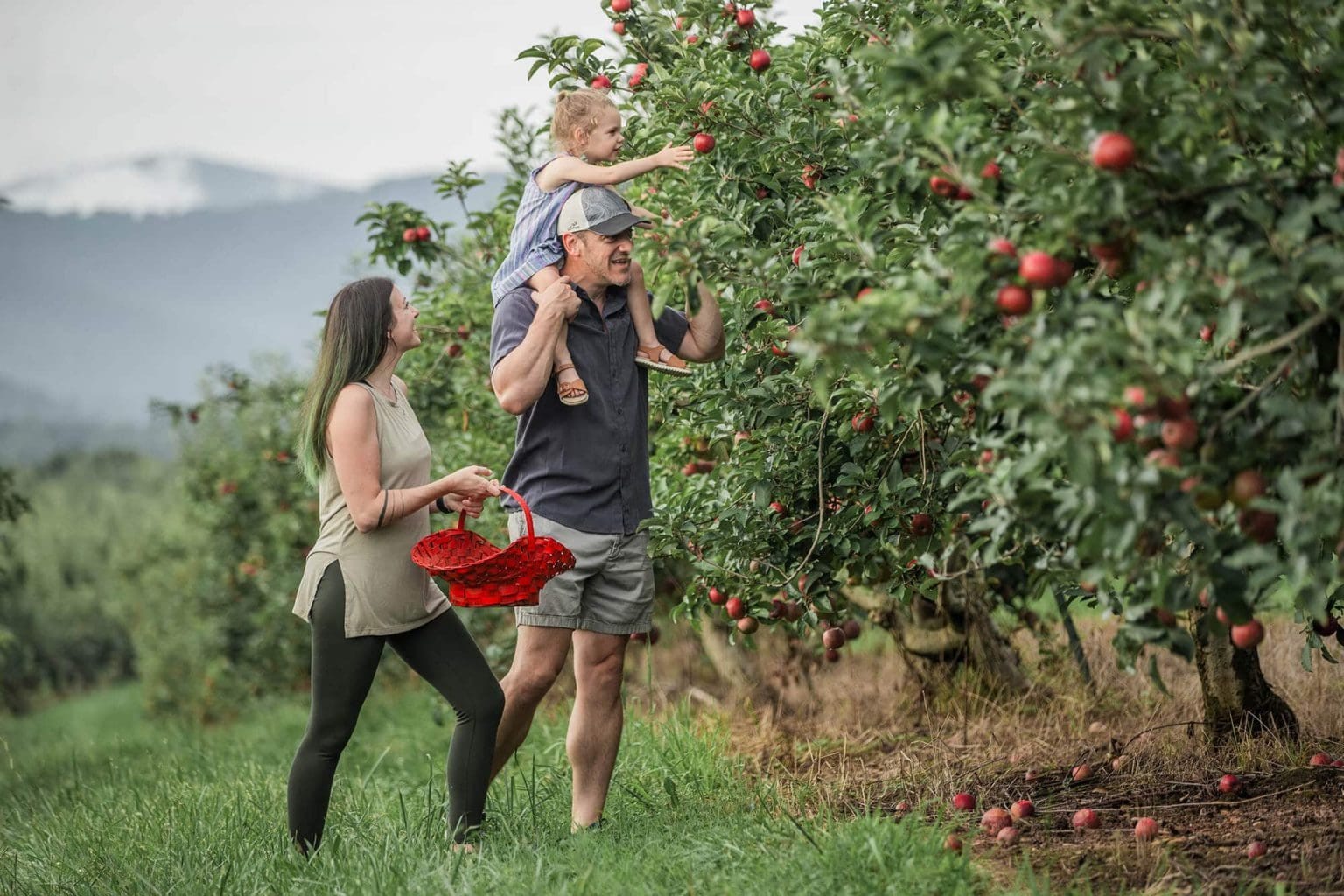
Similar to numerous other damaging mimetic contagions, Instagram started moving the masses in the 2010s. Suddenly, everyone needed to post the perfect fall foliage photo. Apple farms were swamped offline and online with #applepicking #leafseason #pumpkinspicelatte #plaidflannel #uggs4days #blessed #ilovethefall
Burgeoning crowds required more rules and regulations. Farmers began charging entry fees. Instead of allowing external bags, they forced visitors to pre-purchase bags. The tactic prevented theft and skipped the checkout process, but resulted in exorbitant prices that far exceed even Whole Foods. Free entry and $2 per pound spiked to $10 cover per person including kids and $20 for a tiny bag of a dozen apples.
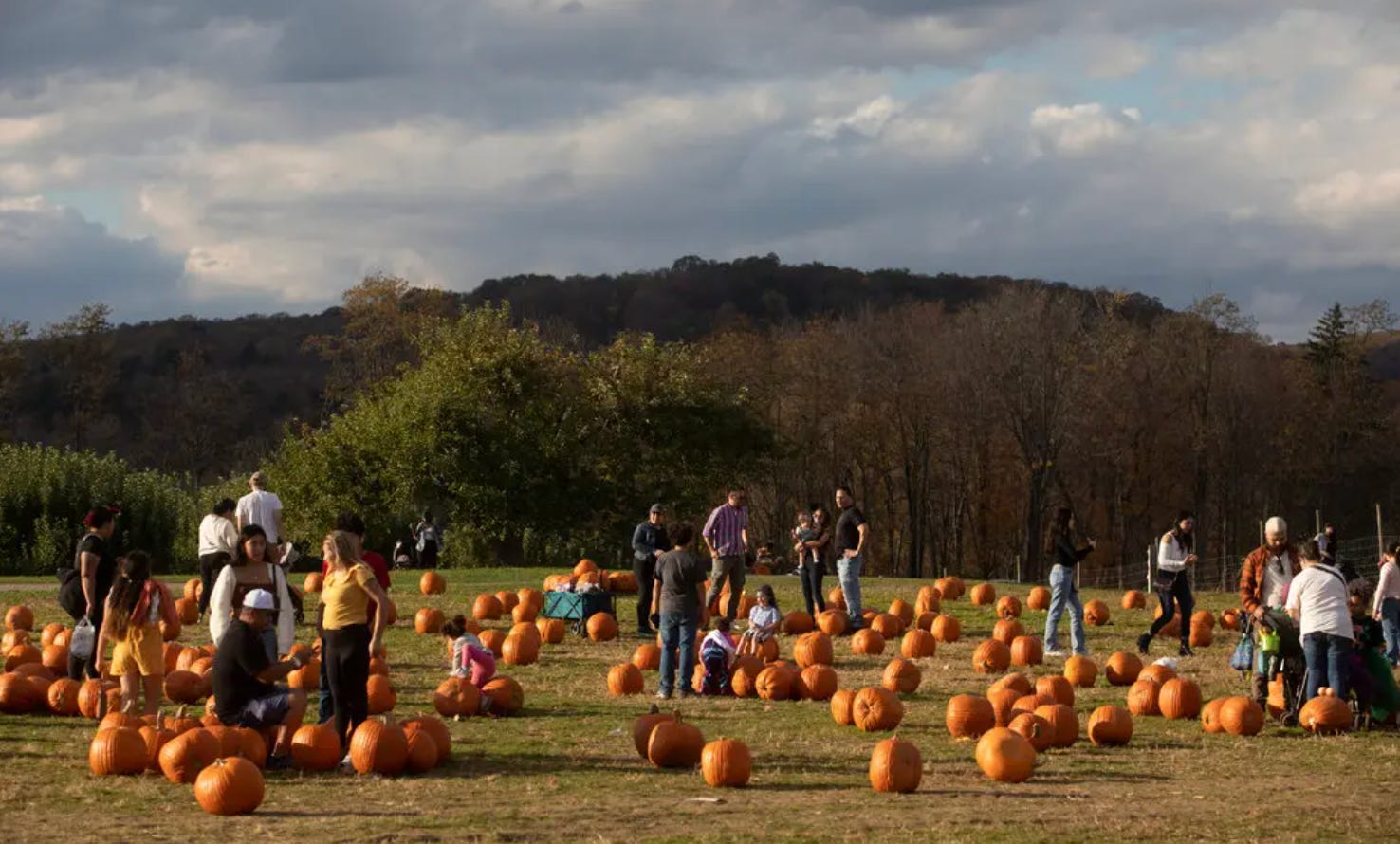
No amount of money could mitigate the negative externalities. Stressful traffic jams snarled overflowing parking lots, compounded by busloads of urbanites. Human noise drowned out nature. Time wasted in long lines for everything from food trucks to tractor rides to portal potties. Apple picking mutated into a cross between the Apple store in Times Square and a Six Flags with trees instead of roller coasters.
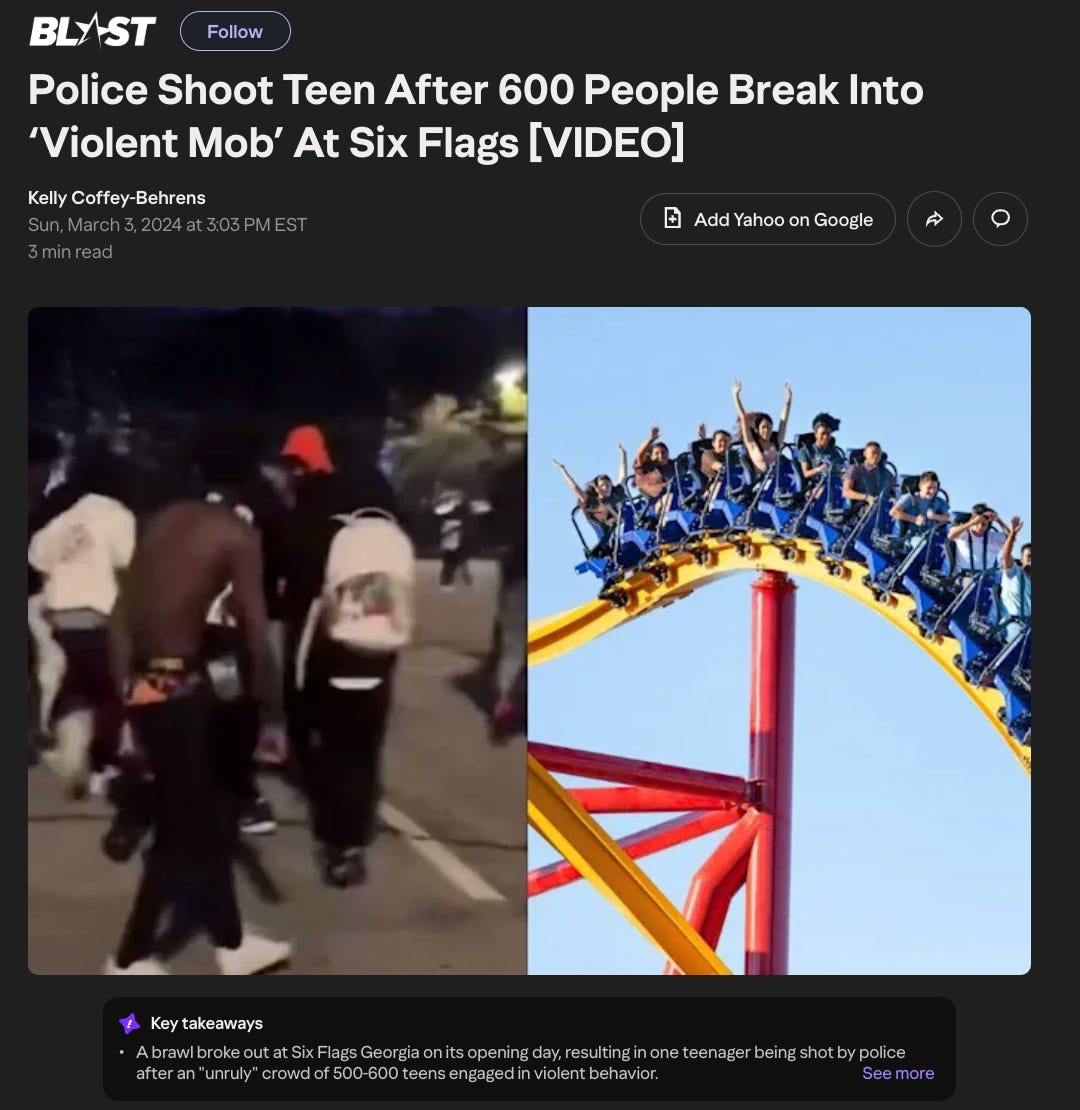
Mass migration and economic zone exploitation further degraded the experience into a low trust quagmire. The supply of apple orchards keeps decreasing. Many farms have been acquired by real estate developers and turned into surburban sprawl, high density “affordable housing” aka slums, or “sustainable energy” aka solar panels. Meanwhile, the demand for apple picking keeps increasing. Immigration-driven population growth supplemented by social media keeps the herds stampeding.
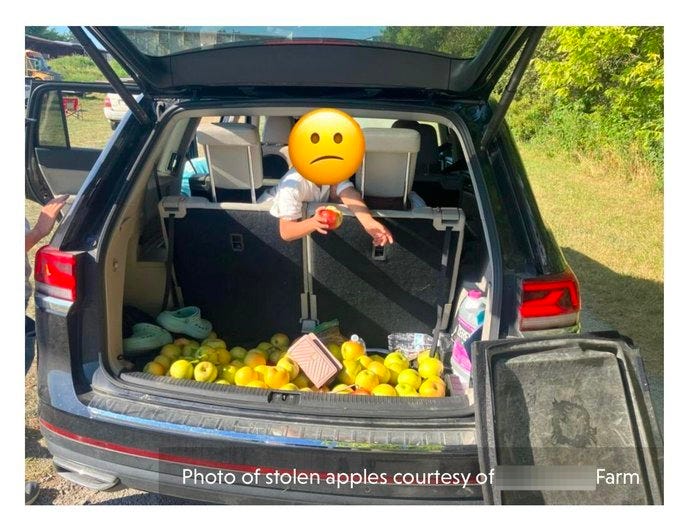
For the farmers who have managed to hold onto their land and traditions, apple picking season is an economic lifeline that keeps them afloat. They must bear the operational headaches and hire additional staff including security. In some cases, third world behavior has necessitated in TSA style inspections of bags and vehicles to ensure that apples aren’t being stolen. It’s all so tiresome.
The apple orchard is a microcosm of America. Apples were among the earliest successful crops on the continent. They flourished in the climate and terrain of the colonies, becoming household staples for boundless varieties of food and drink.
Many apple farms have been passed down through centuries and generations dating back to the Pilgrims. Founding fathers like Washington, Jefferson, and Adams, were fond of hard cider. Benjamin Franklin once mused: “Give me yesterday’s bread, this day’s flesh, and last year’s cider.”
As the nation industrialized and modernized, farming faded. Apple picking went from necessity to luxury. Bad governing decisions, growing seasons, and invasive species can destroy an orchard for good. The easy way is to give up and sell out.
In the progressive present, apple picking is one of countless staples that are now higher cost and lower quality. Healthcare, housing, and education are facing the same trends. Everyone knows why they turned from cheap high trust to expensive low trust, but can’t say it. Instead, they leave scathing reviews like the ones below about various apple picking spots. The communists complaining about affordability will push policies that make everything unaffordable.
Will America remain as American as apple pie?
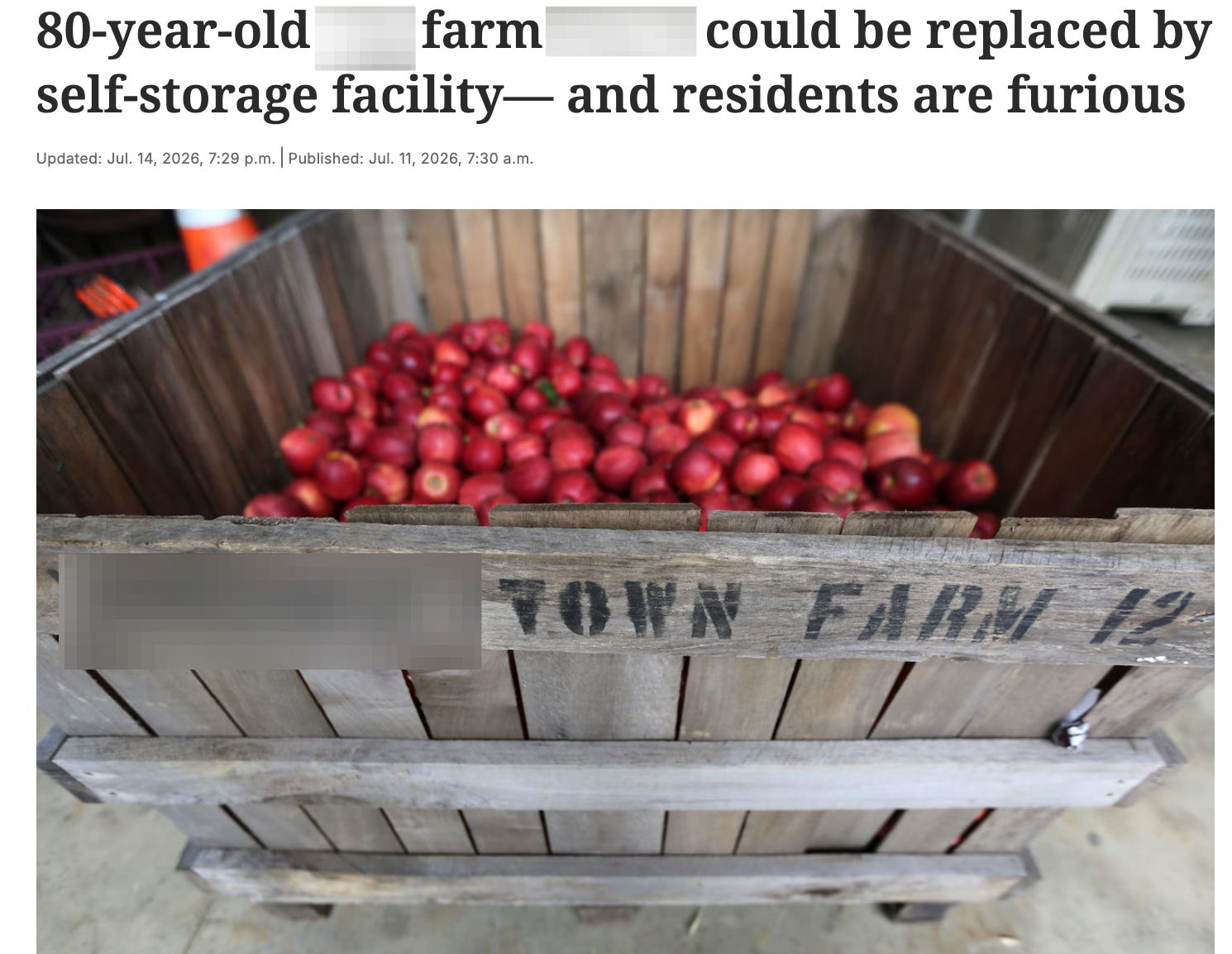
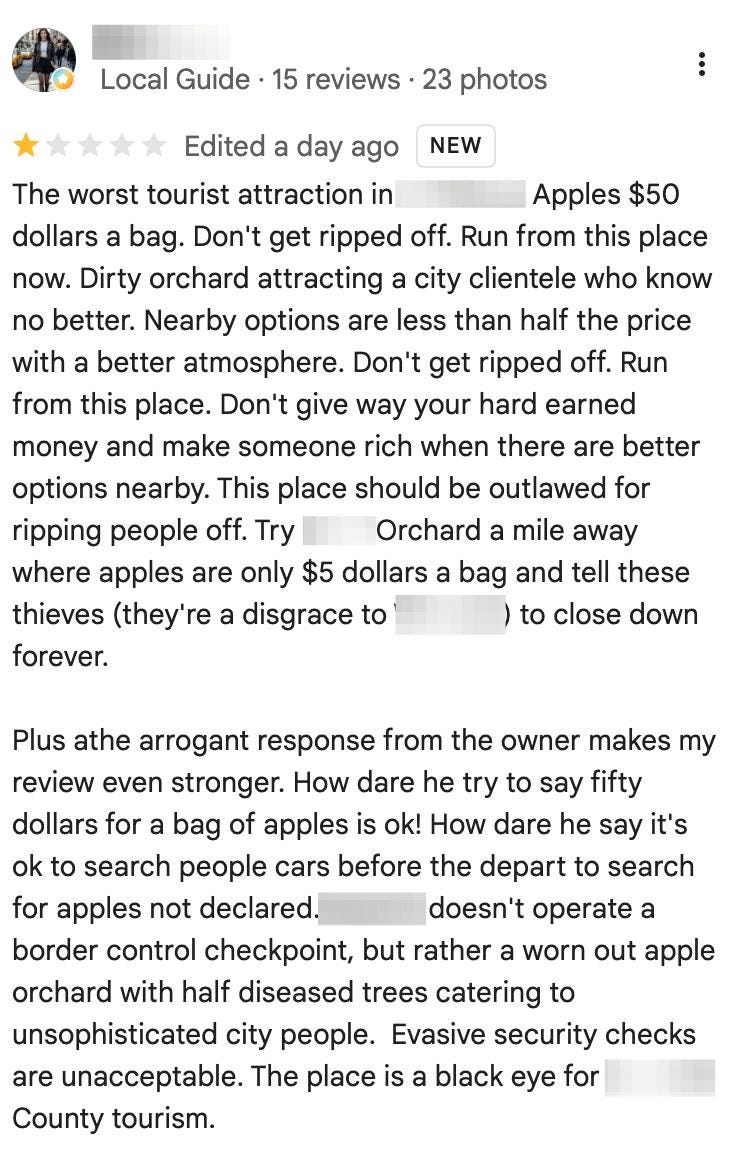
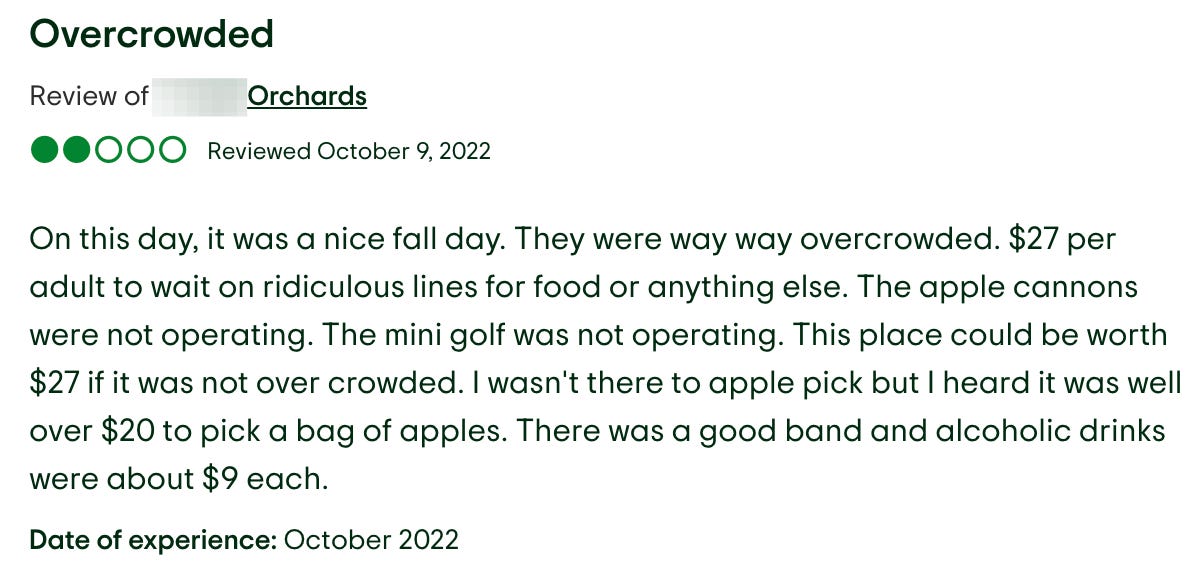
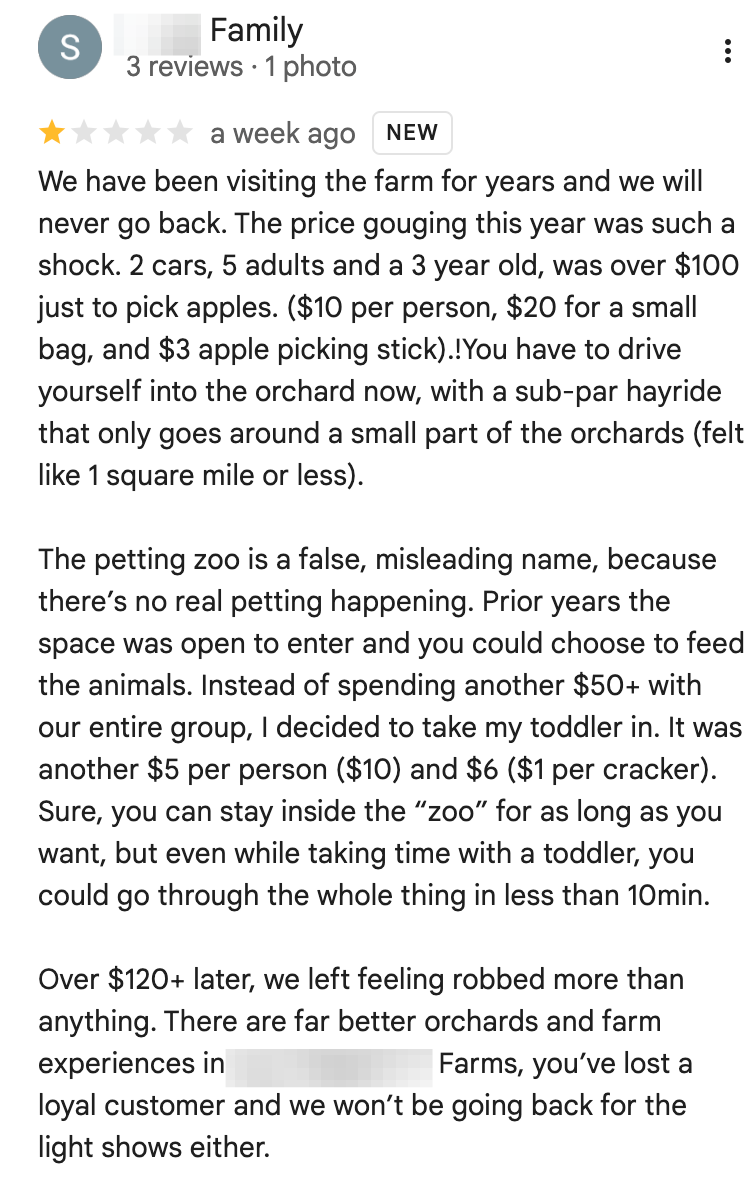
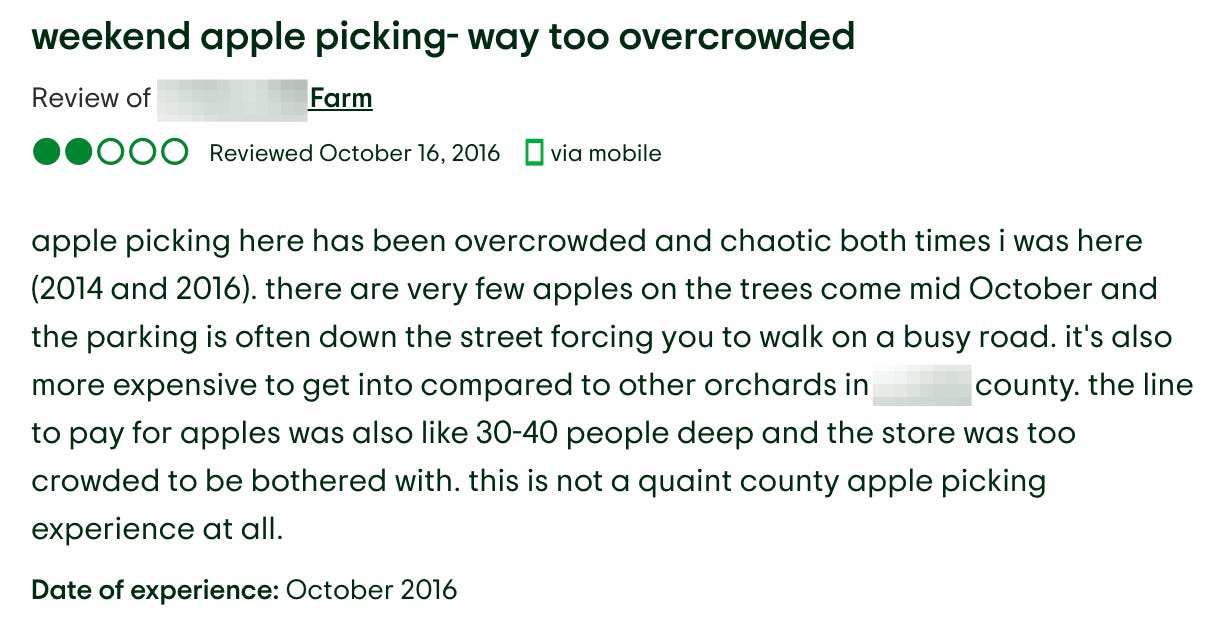
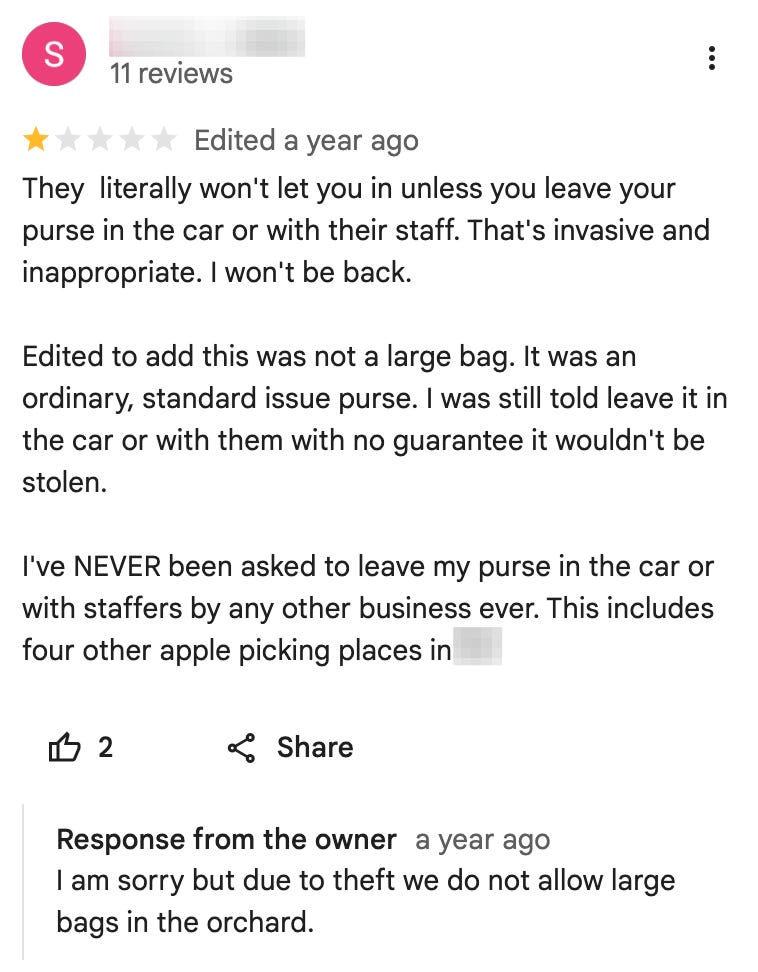
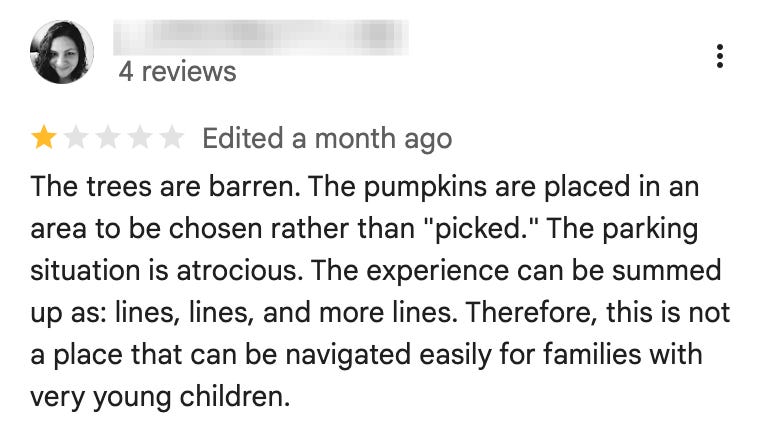
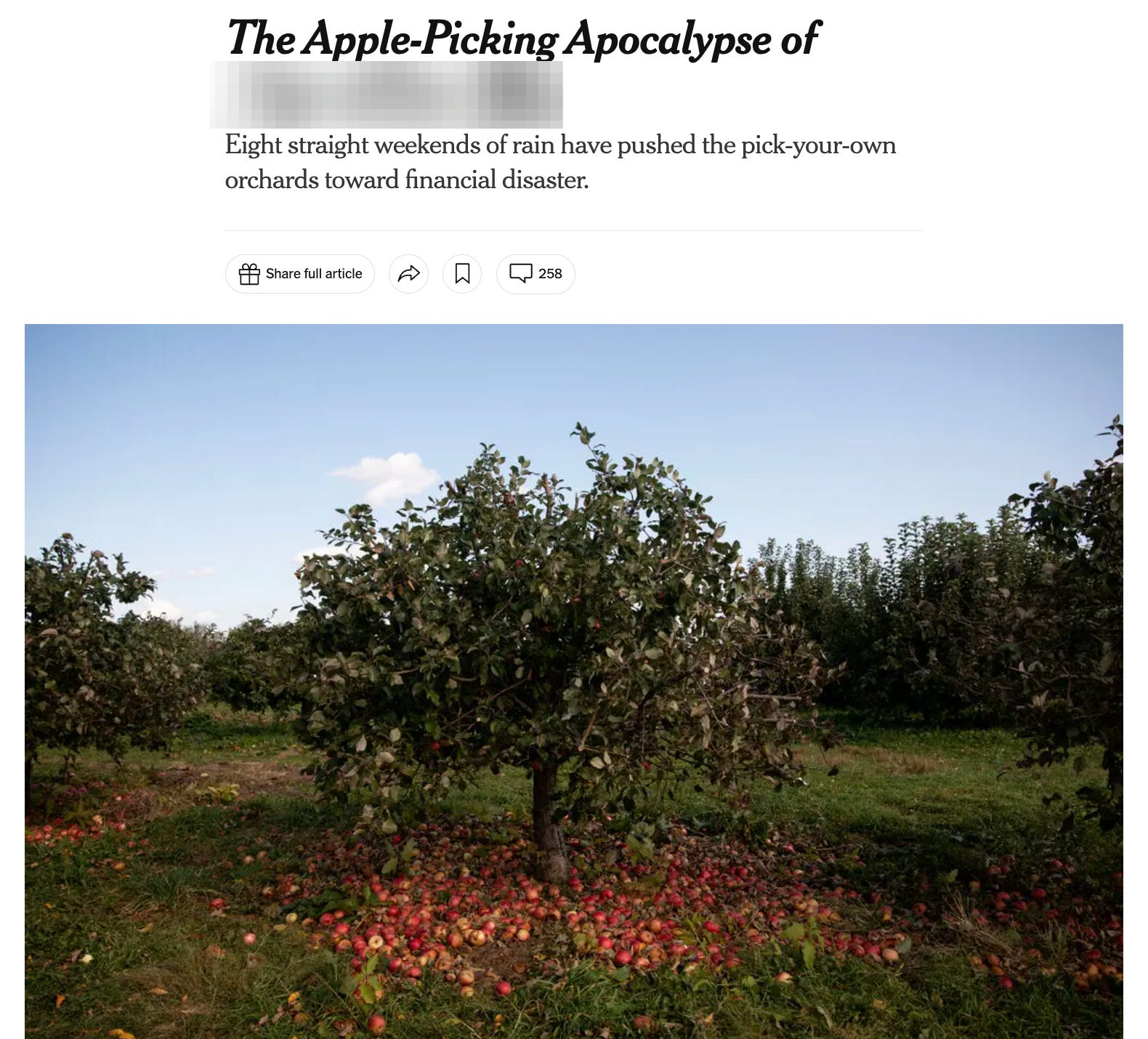
Why are kids ruining apples in Canada and why didn’t this happen until recently?
For more on farming and suburban sprawl:
Clarkson's Farm is a Revolutionary Love Letter

If you ate today, thank a farmer. Clarkson’s Farm is the perfect blend of humour and education. A cosmopolitan celebrity moves to the countryside to cultivate 1,000 acres. He learns, experiments, and struggles with the hardships imposed by nature and the government. As he falls in love with this way of life, he rallies the forgotten men and women to pro…
How To Seize Land with Affordable Housing and Green Energy

Comrades: “Affordable housing” and “green energy” are Communist double-speak for land seizure.

The 5 Types of Suburbs in America

America’s cities are international embarrassments. Under the radar over the past few decades, their demoralization zones have spread to subvert the surrounding suburbs. As the border opened, the middle class eroded and many towns deteriorated. Every real estate broker and prospective buyer knows the differences, but are not allowed to talk about them. T…
I live in apple country in PA. There's one spot, just north of Gettysburg, where you can look out over the rolling hills and there's nothing but apple trees (ok there are other fruit too - but fruit trees in general) for as far as the eye can see. It's an amazing sight. But to be honest, I've never been apple picking here. After experiencing it in MA, when we lived in New England, and the long lines, crazy expensive prices, massive crowds -- I choose to buy apples at a roadside stand. Is it as fun? No. But it's better for my sanity. Maybe the apple picking here isn't as bad - I have no idea. But I'm getting older, my teenager isn't interested in going, and I dread encountering what we experienced in MA. So roadside stands it is!
An orchard shouldn’t need the atmosphere of an airport checkpoint. Bezmenov captures the exhaustion of watching a simple pleasure acquire admission fees, security checks, and rules for everything. Farmers deserve customers who respect their crops and leave the place clean. Families deserve an afternoon they can afford. Both become harder when every encounter begins with suspicion. I’m less interested in someone’s perfect Instagram photograph than whether the farm survives and children learn that food comes from somebody’s work. That lesson matters. Treating another person’s land as a disposable backdrop is a lousy habit, however many likes the picture brings afterward.