

Brown University President Christina Paxson wants to focus on healing, not accountability for the December 13 killings on her campus. On January 5, she announced a “Healing and Recovery Effort” called “Ever True”. She appointed Vice President of Diversity & Inclusion Matthew Guterl (he/him) to lead the initiative. Her full e-mail and his biography are below. They are predictable and tiresome word salads of demoralization.
There can be no healing without accountability. This is a deliberate DARVO strategy to control the narrative. The goal is to absolve the administration’s responsibility in the deaths of Ella Cook and Mukhammad Aziz Umurzokov. Let’s take a closer look at the DEI healing commissar. Amplify the open letter to the Brown board of trustees on X here.
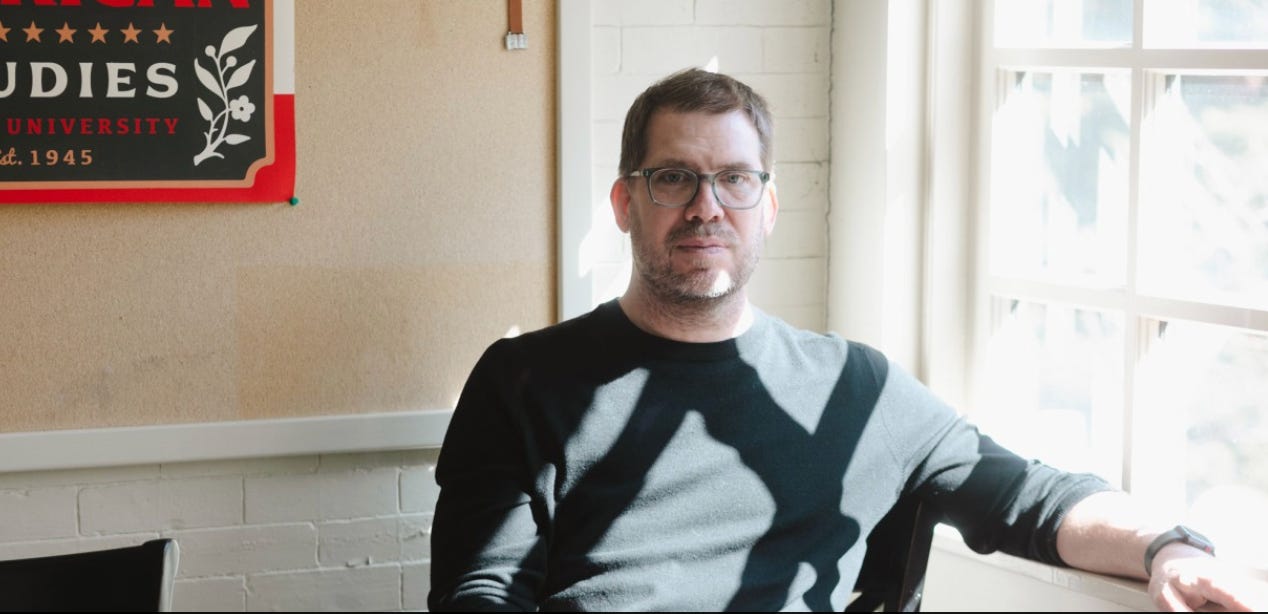
Why does Brown still have a VP of DEI? Why hasn’t the Trump administration pulled funding for continued discriminatory civil rights violations? Why did Paxson hire a white man for this role in March 2025? Why doesn’t he give his job to a more diverse woman of color, as he advocates others to do? How is he qualified to lead a healing initiative that involves treating PTSD and improving campus security?
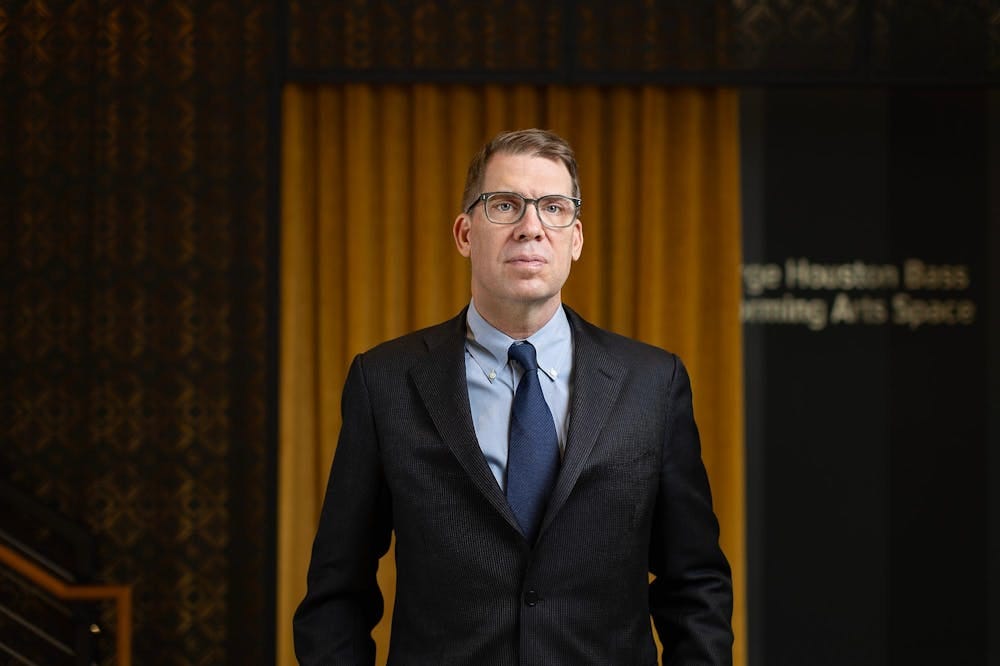
Guterl has a PhD in history. He chaired the Brown’s Department of American Studies from 2012-2022 and served as faculty co-chair of the Diversity & Inclusion Oversight Board from 2016-2022. In the press release on his promotion to VP of DEI, he was lauded for “a strong track record of advancing academic excellence, diversity and inclusion via mentoring and recruiting faculty and staff”.
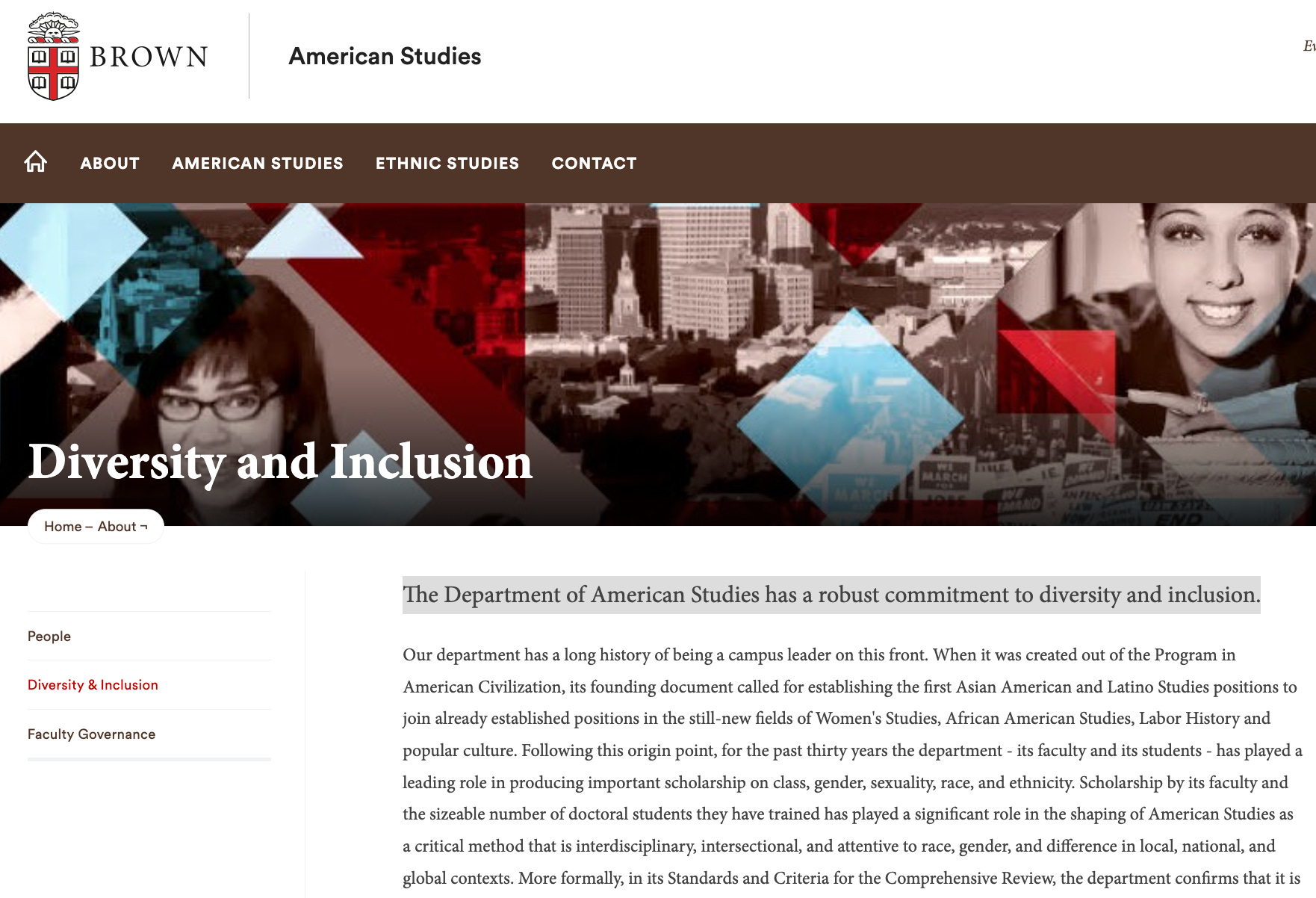
The American Studies department has 15 professors. Aside from Guterl, there is only one white male. The department’s website still proudly promotes DEI. According to Jacob Savage’s Lost Generation article in Compact, “since 2022, Brown has hired 45 tenure track professors in the humanities and social sciences. Just 3 were white American men (6.7%).” Did Guterl commit discrimination in his recruiting and hiring decisions? If he is committed to diversity of opinion, has he hired anyone politically to the right of Mao?
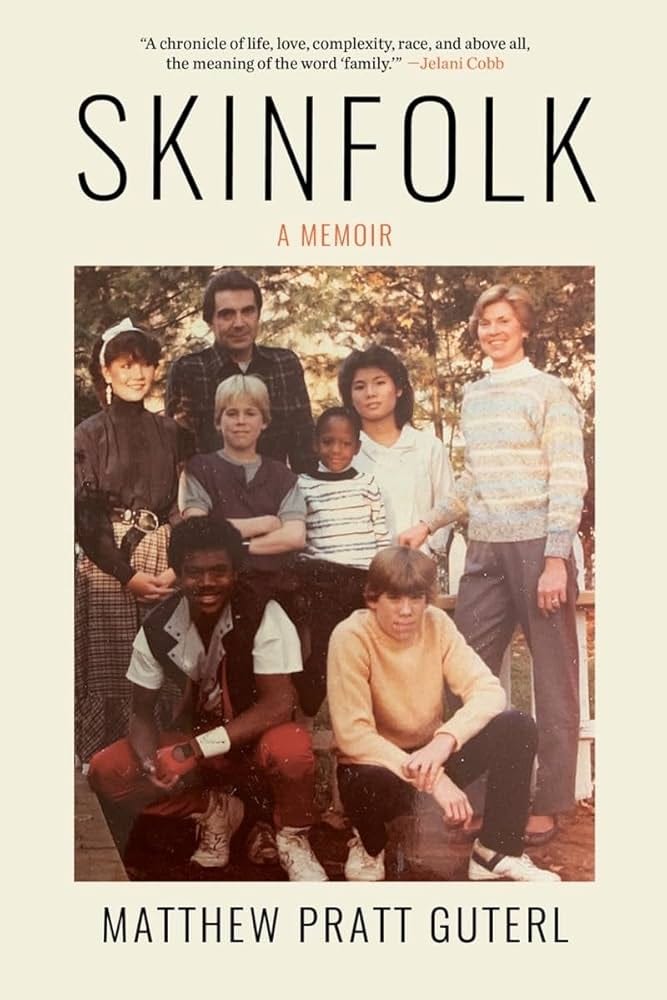
In 2023, Guterl published a memoir called Skinfolk. He reflects on his parents’ radical experiment adopting four children (two of each race) to raise alongside their two biological children (him and his brother). Here is Amazon’s summary:
Could a picturesque white house with a picket fence save the world? What if it was filled with children drawn together from around the globe? And what if, within the yard, the lines of kin and skin, of family and race, were deliberately knotted and twisted? In 1970, a wild-eyed dreamer, Bob Guterl, believed it could.
Bob was determined to solve, in one stroke, the problems of overpopulation and racism. The charming, larger-than-life lawyer and his brilliant wife, Sheryl, a former homecoming queen, launched a radical experiment to raise their two biological sons alongside four children adopted from Korea, Vietnam, and the South Bronx―the so-called war zones of the American century. They moved to rural New Jersey with dreams of creating what Bob described as a new Noah’s ark, filled with “two of every race.”
In an interview with The New York Times about his book, Guterl revealed that he got plastic surgery at age 13 and remains traumatized. Why is this man in charge of healing anyone?
But in interrogating the way he was raised, he doesn’t spare himself. In the book’s most confounding scene, he decides, at age 13, to have plastic surgery, after enduring bullying from his classmates, who harass him with the nickname “N-word lips.” After spending the summer recovering from the procedure, he returns to school only to be greeted by the same old taunt. Now, 40 years later, the remnants of the surgical scar are still palpable on the inside of his lower lip. “I’m not going to present this to you as normal,” he said. “It didn’t feel normal then and it doesn’t feel normal now.”
A 2-star review provides disturbing spoilers about the outcomes of his family’s experiment:
This is a memoir about transracial adoption: a white family adopts one child from Korea, one from Vietnam who is half Black, another from Korea who is half white and an African American child from the Bronx. (A couple of mild spoilers ahead.) The author tells us in the beginning that his parents were loving and caring and yet there is a sense that what they did was somehow wrong, smacking of white saviorism, though I don’t know if the alternative would have been better.
It feels like a lot was left unsaid that needed to be said. How did the adoptees feel about their white parents? The only one who says anything is Bear, the child who is half-Black/half-Vietnamese who says that compared to the hate he got in Vietnam, living in the U.S. was relatively easy.
Later on, the author mentions an “incident” between 2 of the other kids, Bug and Eddie. He doesn’t explain what happened but it seemed to be some kind of fight that was so bad that Bug stopped associating with the family. But why the whole family? In the end, Eddie goes to prison, which the author seems to mostly blame on the school-to-prison pipeline as opposed to personal actions of Eddie. Eddie is allowed out of prison to attend their father’s funeral.
“This bending of the rules is the last act of liberal patriarchy, a reminder that the passing of the great white man, the architect of our multiracial ensemble should extract a performance of grief from each of us,” writes the author. Or maybe, it was just a gesture of goodwill.
The last line of Guterl’s official biography states that he “continues to be interested in writing about Neverland Ranch”. Why is he fascinated by Michael Jackson’s kiddie compound? Are parents comfortable with him comforting their children?
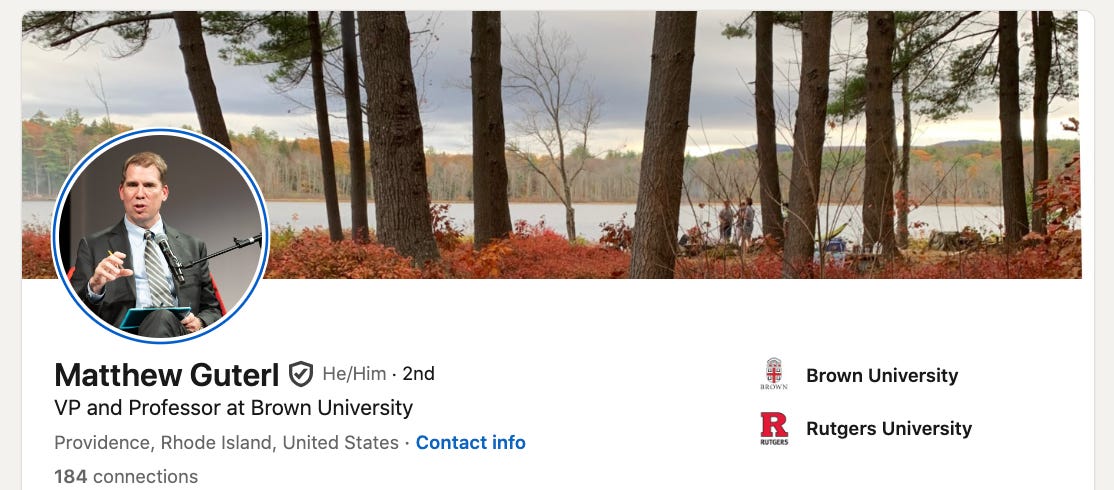
Full biography of Matthew Guterl, L. Herbert Ballou University Professor of Africana Studies and American Studies, Vice President for Diversity and Inclusion:
Matthew Guterl is a historian of the United States from the Civil War to the present, with extensive expertise in the history of race-relations, civil and human rights, and empire. He earned his BA from Stockton State College in 1993 and his PhD from Rutgers University in 1999.
Guterl is the author of five scholarly monographs: The Color of Race in America, 1900-1940 (Harvard, 2001), American Mediterranean: Southern Slaveholders and the Age of Emancipation (Harvard, 2008), Seeing Race in Modern America (UNC, 2013), and Josephine Baker and the Rainbow Tribe (Harvard, 2014). Hotel Life (UNC, 2015), a critique of rentable private space, was co-authored with his collaborator, Caroline Levander. His memoir about growing up in a multiracial adoptive household, Skinfolk, was published in 2023 by Liveright, the literary imprint of Norton.
He is presently working on a global biography of the queer, cosmopolitan, human rights activist, Roger Casement, soon to be published by Liveright. The book is tentatively titled: The Hanged Man: Roger Casement, the Great War, and the Human Rights Revolution.
Guterl has begun researching a new project on the 1970s, titled The Troubles, focusing on the connections and disjunctions, the parallels and divergencies of Black radical politics and “The Troubles” in Northern Ireland. Beyond uncovering the longer historic entanglements of Black/Irish radicalisms, the work will look at the specific conditions of that disastrous decade, illuminating the power of art and culture, and showcasing moments of solidarity, of discovery, and of disillusionment.
He is also writing a monograph on racial passing in the present, long after the supposed heyday of the phenomenon, for the University of North Carolina Press. In the long term, he continues to be interested in writing about Neverland Ranch.
Full e-mail from President Paxson:
Announcing Healing and Recovery Effort
January 5, 2026, Message to the Brown Campus Community
Dear Members of the Brown Community,
There is no playbook for what we have been through as a community. There is no single source of truth for how any of us should heal. No “one path” to begin again, or “right way” to find peace, solace and joy.
But we are Brown — the enduring strength of our caring and supportive community has long been a hallmark of who we are. Ever true.
This is the core tenet of a new campus-wide healing and recovery effort I am announcing today. Called Brown Ever True, this joint project of repair for our campus brings together resources, programming and services focused on mental health, psychological wellness and ensuring a sense of physical security for our full community.
As we prepare for the start of the spring semester, I am deeply committed to the healing we will do together. I am committed to ensuring that students, faculty and staff have the resources and support you need to help us move forward. While the path to repair and recovery is different for everyone, no matter your unique path, it will be supported in a secure, inclusive and compassionate community.
At the same time, our recovery includes planning remembrances for Ella Cook and MukhammadAziz Umurzokov. The outpouring of love and support for their families from the Brown and Providence communities has been deeply moving, and we continue to hold them in our hearts. As we process our grief for Ella and Mukhammad, we will memorialize them, as well as the experiences of the nine injured students, in a campus-wide service being planned for late January. While all the injured students now have been released from the hospital, they and so many others continue to navigate through very real challenges of coping with tragedy.
In this letter, I will share how Brown Ever True:
Is a community-wide effort, bringing together the ideas and contributions of academic and administrative units and student organizations to help ensure that the initiative reflects what our community needs to heal and move forward.
Increases systems of support, building upon the coordinated response from offices across campus that mobilized to provide services in the immediate hours, days and weeks after the devastating Dec. 13 attack on our campus.
Complements our commitment to safety and security, intersecting with plans for the multi-pronged approach to enhancing campus safety and security that we announced last month, to be informed by community feedback.
I invite you to visit the new Brown Ever True website to learn more about the initiative.
A Campus-Wide “Roadmap to Recovery”
Brown Ever True will coordinate the work of the entire campus via a “Roadmap to Recovery” that offers a timeline of programming and activities. Recognizing that community healing takes time, and looks different for each individual, the initiative will focus on both short- and long-term recovery efforts, informed by medical and public health experts and scholars who specialize in trauma. It is modeled on approaches that have been effective on other campuses that have experienced similar tragedies.
Our whole-campus effort for Brown will involve numerous academic and administrative units, including but not limited to the Division of Campus Life, University Human Resources, the College, and the School of Public Health and other academic units. It will also welcome ideas and activities from student organizations. The initiative will coordinate existing resources and allocate new investments in a surge of support for our community in the coming weeks and months. This includes planning and overseeing both broad and targeted community-building efforts and communicating about these efforts to the entire campus.
The work of Brown Ever True is being coordinated by an operational team led by Vice President for Diversity and Inclusion Matthew Guterl, working in close collaboration with partners across campus. The Brown University Community Council (BUCC) is serving as the designated advisory body for the initiative. In its established role as the representative forum for issues of community interest (with membership that includes students, faculty, staff, administrators and alumni), the BUCC will convene regularly to discuss the Brown Ever True initiative and advise the operational team on the needs of the community.
Building on Expanded Systems of Support
Brown Ever True builds upon, rather than replaces, existing systems of support. It encourages community members to access a wide range of existing and new services that mobilized Dec. 13 and expanded to support members of our community over the Winter Break.
For students, Campus Life has led an extensive coordinated response, reaching students through trusted connections and expanded services across mental health, residential life, affinity centers, chaplaincy and student support services. Over the break, students remained in close contact with student support deans and continued to rely on resources such as TimelyCare Teletherapy and BetterHelp to access mental health services from anywhere in the world. As students return to campus, familiar clinicians and staff from Counseling and Psychological Services (CAPS) and across Campus Life will be here to welcome them back and support their transition. As the Brown Ever True effort moves forward, support will shift from acute response to recovery, with a focus on healing, restoring a sense of security, and sustaining a strong sense of community for all students, faculty and staff.
I want to take this moment to thank the many amazing Brown alumni and families who have supported our students in informal gatherings and activities around the world during their time away from campus, expanding our community of support in so many ways. Our extended Brown family of alumni and parents and families will play an essential role in our path toward healing.
At the same time, University Human Resources is building on its expansion of resources in the Employee Assistance Program. Over the break, the program expanded to provide all faculty and staff an additional 12 mental health counseling sessions through the end of 2025. UHR is now working with Brown’s provider, Spring Health, to provide additional crisis counseling sessions for the 2026 calendar year. Resource and support tables and confidential on-site counseling sessions for faculty, staff and postdocs are available this week in a few critical locations. More information is available on the Brown Ever True website, and these will expand across campus as we approach the start of classes.
The Office of Diversity and Inclusion, partnering with faculty in the Warren Alpert Medical School, will continue to organize sessions like the “Resiliency, After” educational sessions held for staff and faculty before the break and the multiple, faculty-led “Together Now” sessions held for the full community. Brown Ever True will serve as a portal to access various community-driven efforts like these while also sponsoring broader campus activities and programming informed by public health best practices.
Security as Part of Recovery (including plans for Barus & Holley)
Brown is committed to building a stronger, resilient and sophisticated campus safety and security infrastructure. The safety and security of our community is not only a priority, but a responsibility aligned with Brown’s core institutional values.
Our values affirm that the University “holds itself responsible for generating the conditions necessary for every individual member of its community to thrive.” We recognize that a secure campus is a necessary condition for fulfilling our mission of education and research, and for all members of our community to feel a sense of security and belonging as they pursue knowledge in service to society.
A key step in the path to recovery is to engage faculty, staff and students and the local community in discussions about what it means to fulfill this responsibility for maintaining a secure campus, and Brown Ever True will help steward this work. We will provide meaningful opportunities for members of the campus community to share their experiences, perspectives and feedback about security infrastructure, staffing, and approaches, both in the context of safety and Brown’s values as a teaching and learning community.
I encourage all members of our community to read my Dec. 22 message to the community and the Dec. 30 letter providing an update on safety actions shared by Interim Vice President for Public Safety Hugh Clements. They provide important details about ongoing campus safety and security assessments, as well as the security actions and priority projects that have been accelerated for completion prior to the start of the Spring 2026 semester. These include transition to card access for the remaining buildings currently requiring keys for entry; installation of additional security cameras in key areas, including at Barus & Holley, pending the findings of the campus safety assessment; and expansion of panic buttons in critical areas, among other priority projects.
We know that resuming operations in Barus & Holley is particularly sensitive, and extensive work has taken place over the Winter Break to alter operations. This includes relocating a number of classes to alternate locations as well as expanding class schedules while we close portions of the building — some lecture halls, classrooms, hallways and adjacent spaces — by sealing and securing them behind new walls and emergency access doors. Most of the building remains generally closed while this work is ongoing.
Faculty, staff, postdocs and graduate students in the School of Engineering and the Department of Physics received a communication Dec. 23 outlining expectations and a timeline with regard to Barus & Holley, the Lassonde Innovation and Design Hub, and the Engineering Research Center. The University has been in touch directly with the limited number of colleagues who will resume research in these spaces this week, sharing access to community support and related trauma-informed resources. General access to the buildings will resume Jan. 20.
Looking Ahead
We all should understand that real recovery is a gradual process. The effects of Dec. 13 may surface in uncertain ways. And “recovery” will at times seem elusive. At the same time, there is no question about the amazing resilience of our community.
In the face of unthinkable tragedy and loss, I have been inspired by our students, faculty, staff and alumni. The name of the Brown Ever True initiative was inspired by the ways many of you naturally invoked this phrase as a clarion call in the days after the tragedy. In countless emails, calls and letters I have received, members of our community have insisted that we must declare loudly to the world all that “we are.”
We are caring and we are steadfast. We are thoughtful and determined and strong. We have suffered loss, but our strength is the special character of our community. We are Brown.
And we are ever true.
Sincerely,
Christina H. Paxson
President

For more on the Brown farce:

The Real Investigation at Brown Begins Now

On the evening of December 18, police surrounded a storage facility in New Hampshire and found a suspect dead from a self-inflicted gunshot wound. He was identified as Claudio Neves Valente, a 48-year-old Portuguese national. Valente had enrolled in Brown’s Physics PhD program from 2000 to 2001 and dropped out in 2003, but remained in America on a diver…
There is only one way to truly reform Brown and return it to being a true institute of higher learning - close the university, fire every teaching and administrative employee and spend a couple of years rebuilding a sane, competent staff which is dedicated to teaching rather than indoctrinating. It’s a garbage institution right now and will be nothing but poison ☠️ Ivy until it is flushed of its poison.
Nothing says "we don't have a clue about what we're doing" than a complex web of support from committees and groups.